This post may contain affiliate links. As an Amazon Associate I earn from qualifying purchases, at no extra cost to you.
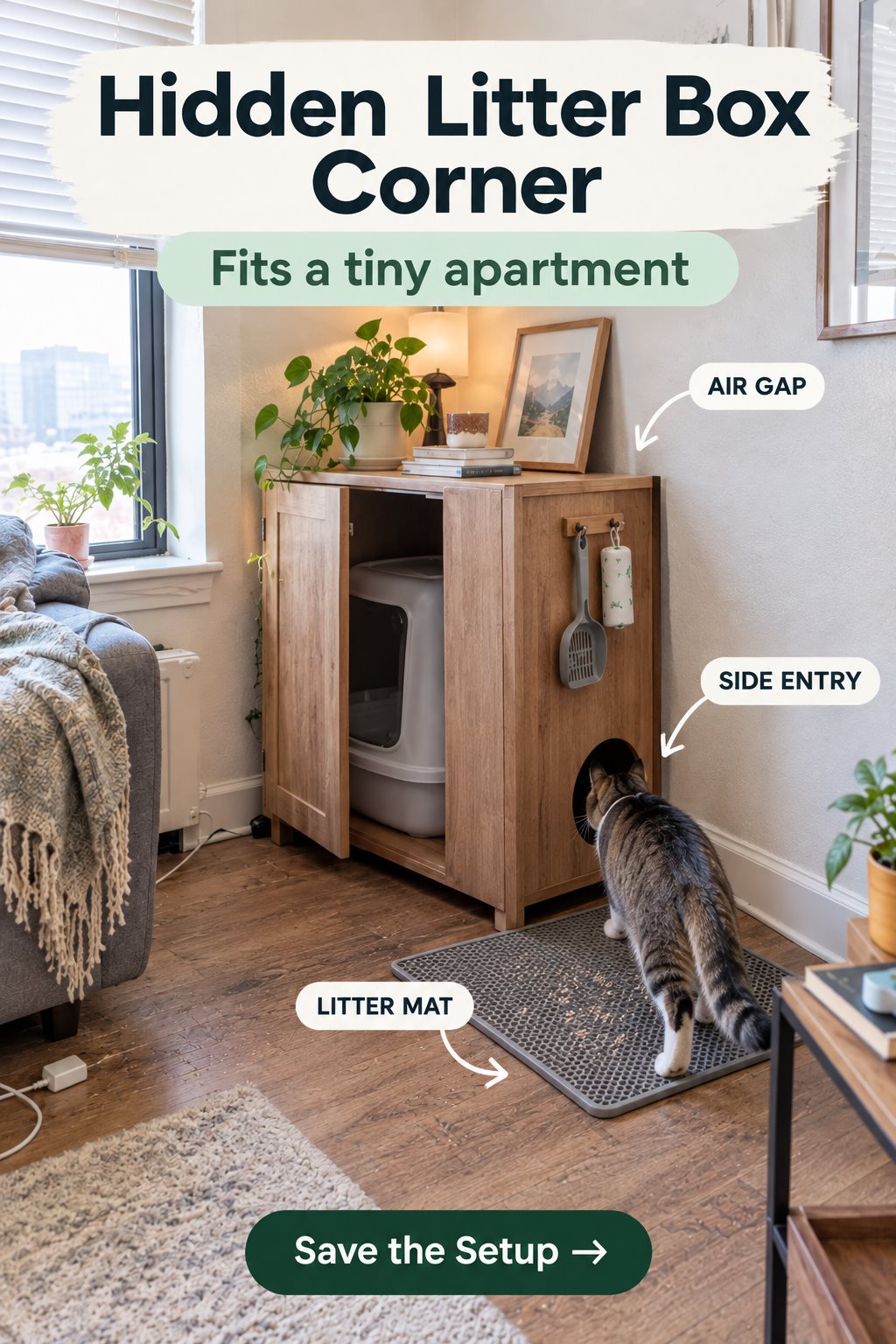 |
| Example setup (illustration) |
In a studio or one-bedroom, the litter box is often the first thing a guest sees. A cabinet with a side entry hides it, doubles as a side table, and keeps scattered litter in one spot. It only works if the cat is still comfortable using it, so size and airflow come first.
The 4 parts of a hidden litter box corner
- Side entry: the opening faces the side, so the box is out of view from the room
- Litter mat: a trapping mat right where the cat steps out
- Scoop hook: the scoop and bags hang on the cabinet, ready for the daily scoop
- Air gap: a little space behind the cabinet and open vents so odor does not build up
Quick picks
Sizes are from the product listings, last checked September 2026. Listings change, so check before you buy.
Check the size first
The AAHA/AAFP feline guidelines for vets recommend a litter box at least one and a half times the length of the cat, measured from nose to tail tip. They also note that most store-bought boxes are smaller than that.
A cabinet adds a second limit: the box has to fit inside it. So measure in this order:
- Your cat: measure the full length and multiply by 1.5. That is the box length to aim for.
- The box: length, width and height, including the rim.
- The cabinet inside: the space behind the doors, not the outside size.
- The floor spot: cabinet plus the mat in front of the entry, with room for you to open the doors.
1. Side entry: out of view, still easy to use
A side opening means you see a side table from the sofa, not a litter box. The doors on the front are for you, for scooping and changing litter.
The HOOBRO farmhouse enclosure has a side entry, vents and double doors, and the top works as a side table. Its outside size is 31.5 by 17.7 inches and 20.3 inches tall.
The seller gives the same numbers for the inside, which cannot both be exact, so measure your box against the real inside before you rely on it. The cabinet is particleboard and MDF, which does not like standing water, so keep a tray under the box.
2. Litter mat right at the exit
Litter tends to leave the box on the cat's paws. Put the mat where those steps land: in front of the side entry, not in front of the doors.
The Pieviev mat has a honeycomb top layer that catches litter and a waterproof, slip-resistant bottom layer. You lift it, the litter drops through, and you pour it back in the box. At 30 by 24 inches it covers the landing spot beside a cabinet this size.
3. Scoop hook on the side
The daily scoop happens more often when the scoop is right there. Hang it, with a roll of bags, on the outside of the cabinet near the doors.
Command Large Utility Hooks hold up to 5 pounds each and stick to smooth, finished surfaces without screws, so the cabinet stays intact if you move.
4. Leave an air gap
A closed cabinet can trap odor, which is the opposite of what you want. Pull the cabinet a few inches away from the wall, keep the vents clear, and scoop every day. The guidelines above also recommend hot water rather than soap or strong chemicals for cleaning the box.
Where to put it
The same vet guidelines describe a good spot as quiet, convenient for the cat, and with a way out, so the cat does not feel trapped. In a small apartment that usually means a corner away from the front door and the TV, with the entry facing open floor rather than a wall.
If you have more than one cat, the usual rule of thumb is one box per cat plus one, so a single hidden box may not be enough on its own.
Setup checklist
- The box is about 1.5 times your cat's length and fits inside the cabinet
- The entry faces open floor, not a wall
- The mat sits in front of the entry
- The scoop and bags hang within reach
- There is a gap behind the cabinet and the vents are clear
What we would skip
- A cabinet that forces a small box: hiding the box is not worth a box your cat finds cramped.
- Air fresheners inside the cabinet: they cover the smell instead of removing it. Daily scooping does more.
- Closing the cat in: keep the entry open at all times.
FAQ
Will my cat use a hidden litter box?
Many do, but not all. One gentle way is to move the box into the cabinet with the front doors open for the first few days, then close them once your cat is using it.
How big should the litter box be?
At least 1.5 times your cat's full length, according to the AAHA/AAFP guidelines.
How often should I clean it?
Scoop daily, and wash the box with hot water when you change the litter.
Start by measuring your cat and your box. If they fit the cabinet, the rest of the corner takes one afternoon.


Comments
Post a Comment